There is no phrase more stressful in a commercial kitchen than: "The Health Inspector is here."
In the Northern Territory, where the heat accelerates bacterial growth faster than almost anywhere else in Australia, food safety standards NT are strictly enforced. If your cool room is running warm, you don't just risk a fine—you risk being shut down.
To help you pass your next audit with flying colours, we have put together the essential temperature checklist every Darwin venue needs to know.
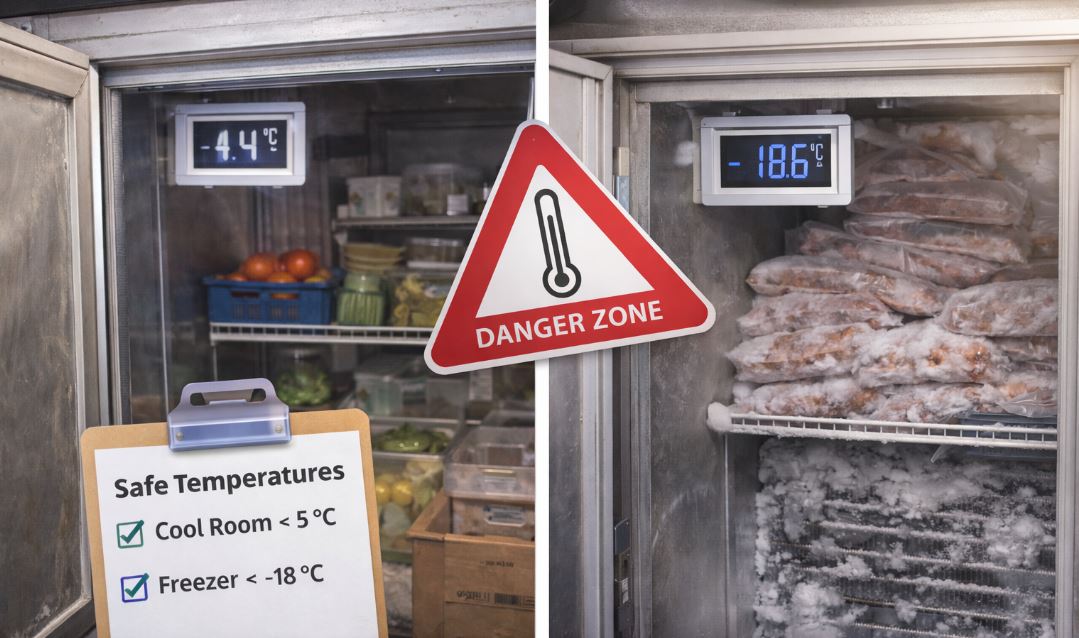
Clip this to your clipboard or pin it to the cool room door. These are the non-negotiable numbers for commercial kitchen compliance.
Cool Rooms & Display Fridges: Must operate below 5°C.
Target: We recommend aiming for 2°C to 4°C to give yourself a safety buffer during busy service.
Freezer Rooms: Must operate below -18°C.
Hard Ice Cream: Often needs -22°C to hold texture.
Incoming Goods: Must be received at 5°C or lower.
Tip: If a delivery truck arrives and the milk reads 8°C, reject the delivery. Once you sign for it, that safety risk becomes your problem.
The "Danger Zone" isn't just a song from the 80s—it’s the temperature range where food poisoning bacteria (like Salmonella and Listeria) multiply rapidly.
In a Darwin kitchen that is sitting at 35°C ambient temperature, food left on a bench can enter the Danger Zone in minutes.
** The 2-Hour / 4-Hour Rule:**
0–2 Hours: Food held in the danger zone for less than 2 hours can be refrigerated or used.
2–4 Hours: Food held for 2–4 hours can be used immediately but cannot be returned to the fridge.
4+ Hours: Throw it out. It is not worth the risk.
You can tell the inspector that your fridge "runs fine," but if you don't have it written down, it didn't happen.
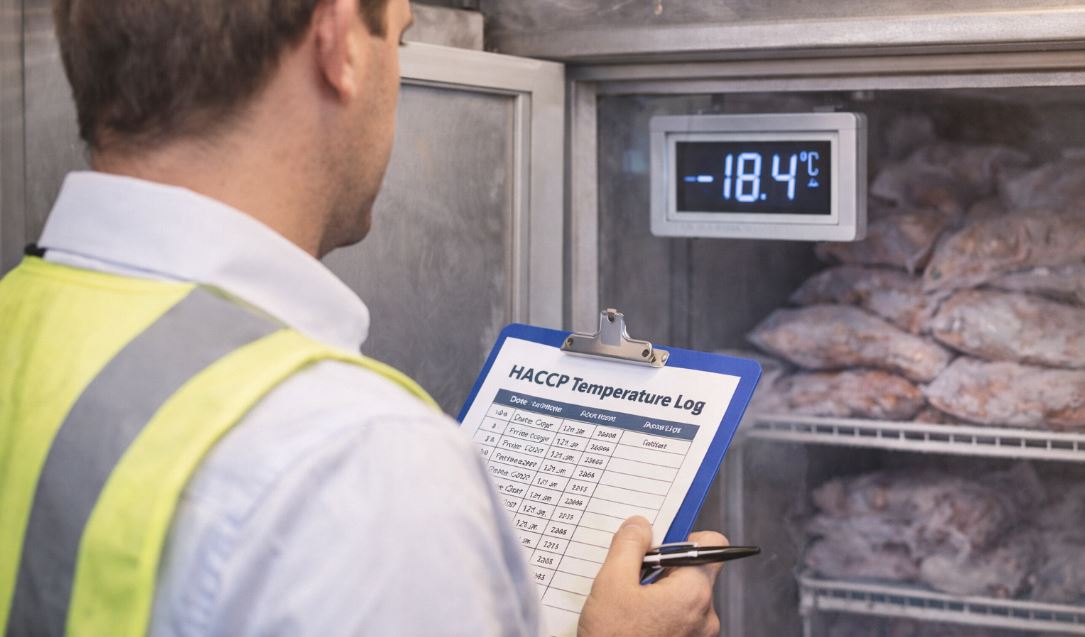
Under Food Safety Standard 3.2.2, you are required to monitor and record the temperature of high-risk foods. This is your "Due Diligence" defence. If a customer claims they got sick, your HACCP temperature log is your proof that your storage was safe.
Best Practice: Check and record your equipment temperatures twice a day:
Morning Pre-Start: Before the doors open and the heat gets in.
Mid-Service or Close: To ensure the unit recovered from the lunch rush.
📥 Free Download: Daily Temperature Log Sheet
Don't have a log book? We have created a simple, ready-to-print template for Darwin businesses. [Click Here to Download Your Free Temperature Log PDF]
(Note: You can link this button to a simple PDF file hosted on your site)
If you are staring at your thermometer and it reads 7°C or 8°C, you are operating illegally.
Often, this isn't because the fridge is broken, but because it needs a "tune-up." Dirty coils, low gas pressure, or worn door seals can all prevent a unit from reaching that critical safe zone.
Don't risk your food licence. If your numbers are drifting into the Danger Zone, call Fridgie Didge for an urgent calibration and service.